ByJohn A
Benefits of Screw Pile Installation for Construction Projects
Choosing the right foundation is one of the most important decisions in any construction project. Foundations transfer the loads of a structure into the supporting ground, helping provide stability and controlling movement throughout the building’s service life.
Traditional foundations, including concrete footings, remain appropriate for many projects. However, screw piles offer an alternative that can be particularly useful where reduced excavation, restricted access, or specific installation requirements influence the design.
Screw piles, also known as screw piers or helical piles, are steel foundation elements installed by rotating them into the ground. Their suitability depends on factors such as soil conditions, structural loads, corrosion exposure, installation requirements, and engineering design.
For residential builders, property owners, and developers, understanding the benefits of screw pile installation for construction projects can help inform foundation planning.
MRN Excavations provides screw pier installation and excavation services across Sydney, Wollondilly, the South Coast, and surrounding areas. This guide explores the main advantages of screw pile foundations, their common applications, and the considerations that determine whether they are the right choice.
What Is Screw Pile Installation?
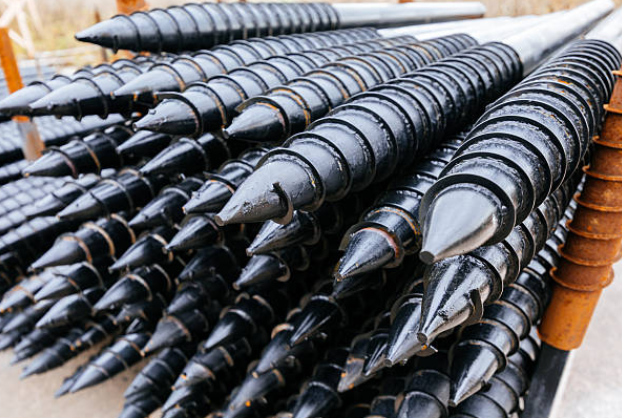
Screw pile installation involves mechanically rotating a steel shaft fitted with one or more helical plates into the ground.
As the pile advances, the helix interacts with the surrounding soil. The completed foundation transfers structural loads into the ground in accordance with the engineering design.
The shaft, helix configuration, installation depth, and number of piles are selected according to the required performance and site conditions.
Screw piles may be used to support selected residential structures, decks, raised floors, extensions, and other engineered applications. They can also be considered for projects involving difficult access or ground conditions where an alternative foundation approach may be beneficial.
The system should always be selected through an appropriate design process rather than simply choosing a pile based on convenience.
1. Faster Installation in Suitable Conditions
One of the main benefits of screw pile installation is the potential to complete foundation work efficiently.
Because piles are mechanically rotated into the ground, the installation process may avoid some of the excavation, formwork, and concrete placement associated with conventional footings.
Where the site is suitable and the design requirements are straightforward, this can help reduce the time needed to establish the foundation system.
A faster installation may also simplify coordination with other trades, particularly when foundation work is an important milestone in a construction schedule.
However, actual time savings depend on the ground, pile quantity, site access, installation equipment, and verification requirements. Rock, obstructions, or unexpected conditions can extend the process.
2. Reduced Excavation and Spoil Removal
Conventional footing systems may require individual holes or trenches to be excavated and the removed soil transported away or reused.
Screw piles can reduce the volume of soil disturbed because the pile is installed directly into the ground.
This can be beneficial on residential sites where space for spoil stockpiles is limited or where truck access is difficult.
Reduced spoil handling may also help keep the work area more manageable during construction.
Nevertheless, the overall project may still require excavation for connections, ground beams, service trenches, or other structural components. The savings depend on the complete foundation design.
3. Useful for Restricted-Access Sites
Many residential properties have narrow side passages, established gardens, nearby buildings, or limited machinery access.
Some screw pile systems can be installed using compact equipment that operates within relatively confined spaces.
This may make them a practical option for selected extensions, decks, raised floors, and other projects where larger excavation machinery would be difficult to position.
Before choosing a system, the installer should confirm the required equipment dimensions, operating clearance, access route, and ground bearing conditions.
Restricted access does not automatically make screw piles feasible, but it is an important consideration when comparing foundation options.
4. Potential to Reduce Site Disturbance
Because screw piles generally require less excavation than some conventional foundation systems, they can help reduce disturbance to the surrounding ground.
This may be useful when working near existing landscaping, pathways, or occupied properties.
A smaller excavation footprint can reduce the amount of soil that must be handled and may limit the need to reinstate certain surfaces.
The actual level of disturbance depends on equipment movements, site preparation, pile layout, and associated construction work. Careful planning remains essential.
5. Suitability for a Range of Structural Applications
Screw piles are available in different configurations to meet varying engineering requirements.
Depending on the design, they may support compression and tension loads and can be arranged to accommodate different structural layouts.
Common applications include:
- Selected residential extensions.
- Raised floors and lightweight structures.
- Decks and outdoor structures.
- Engineered foundation systems on sloping blocks.
- Certain retaining or support structures.
- Other projects where a designed screw pile solution is appropriate.
The foundation designer must establish the required capacity and configuration. A screw pile system that works for one structure may not be suitable for another.
6. Potential Scheduling Advantages
Construction schedules often depend on the timely completion of foundation work.
If screw piles can be installed efficiently and the required checks are completed, the project may be able to progress to the next stage without waiting for the same sequence of concrete placement and curing required by some traditional systems.
This can be valuable when coordinating framing, structural steel, or other trades.
However, it is important to distinguish between installation time and the time required for design, approvals, site preparation, and verification. These activities must still be included in the overall programme.
The project manager should confirm when the installed foundation is ready for loading under the approved design.
7. Adaptability to Certain Ground Conditions
Screw piles can be designed for a range of ground conditions, but their suitability depends on the soil profile and installation requirements.
The presence of variable soil layers, groundwater, rock, buried obstructions, or aggressive ground conditions can influence the choice of foundation.
Geotechnical information helps the design professional determine whether a screw pile system is appropriate and what specifications are needed.
If a pile encounters unexpected resistance or cannot achieve the required installation criteria, the contractor should stop and seek the appropriate technical direction rather than making unapproved changes.
8. Reduced Need for Concrete in Some Foundation Designs
Some screw pile systems can be installed without pouring concrete around each pile shaft.
This may reduce the amount of concrete required for the foundation component itself, along with associated delivery and placement activities.
For projects where reduced concrete use is a priority, this can be one factor in the foundation comparison.
However, it does not mean that every screw pile project is concrete-free. Concrete may still be required for pile caps, beams, slabs, or other structural elements.
Any environmental comparison should consider the complete foundation system, including steel production, transport, installation, corrosion protection, and expected service life.
9. Important Considerations for Long-Term Performance
A foundation must perform throughout the life of the structure, so initial installation speed is only one part of the decision.
Engineering Design
The design must account for structural loads, ground conditions, pile arrangement, connection details, and applicable standards.
Corrosion Protection
Steel piles require suitable corrosion protection based on the ground environment and expected service life. The specification should address exposure conditions and the relevant design requirements.
Installation Quality
The installer must follow the specified method and record relevant installation information. The design professional determines the appropriate acceptance and verification criteria.
Structural Connections
The connection between the pile and the supported structure is important. Incorrectly designed or installed connections can compromise the performance of an otherwise suitable foundation.
See also: How Businesses Build Composable Solutions
Inspection and Documentation
Maintain the installation records, engineering information, and inspection documentation required for the project.
These considerations help ensure that the foundation is assessed as a complete engineered system.
Screw Piles Compared with Traditional Concrete Footings
Neither foundation type is universally better. The appropriate choice depends on the design, site, and project priorities.
| Consideration | Screw piles | Traditional concrete footings |
| Installation | Mechanically rotated into the ground | Usually involves excavation and concrete placement |
| Spoil generation | Often lower for the foundation component | Depends on footing size and excavation requirements |
| Concrete requirements | May be limited for the pile component | Concrete is a central part of the footing |
| Site access | Some systems suit restricted access | Access depends on excavation, formwork, and concrete delivery needs |
| Ground suitability | Requires appropriate soil and installation conditions | Also depends on ground conditions and engineering design |
| Time before loading | May be short when specified acceptance criteria are met | Often includes a specified concrete curing period |
| Design requirements | Requires suitable pile and connection design | Requires suitable footing and reinforcement design |
A qualified designer should compare the options using the actual site information and project requirements.
What Affects Screw Pile Installation Costs?
The cost of screw pile installation for construction projects depends on the number of piles, their dimensions, the required load capacity, and the complexity of the work.
Other factors include ground conditions, access restrictions, equipment mobilisation, corrosion protection, engineering fees, and any required testing or inspections.
A low initial installation price may not reflect the complete cost of the foundation system. Ask whether the quotation includes engineering coordination, pile supply, installation, documentation, and any required verification.
Where the design or ground conditions are uncertain, clarify how additional work and variations will be priced.
Why Professional Installation Matters
Screw piles are structural foundation elements, so installation should be carried out by an appropriately qualified and experienced contractor.
In NSW, relevant licensing requirements can apply to underpinning and piering work. The precise requirements depend on the scope and value of the project.
A professional installer should understand the specified system, use suitable equipment, identify underground service risks, and communicate unexpected conditions.
Before work begins, underground service information must be obtained and assessed. The work area should also be managed to control machinery risks and maintain appropriate separation between workers and operating equipment.
Professional installation supports consistency, traceability, and coordination with the wider construction team.
Why Consider MRN Excavations?
MRN Excavations offers screw pier installation and excavation services across Sydney, Wollondilly, the South Coast, and surrounding regions.
The company’s service range includes screw piers, bulk excavation, and detailed excavation, making it a potential point of contact for projects requiring foundation installation and related groundworks.
When requesting a quotation, provide the engineering plans, project location, proposed structure, access information, and any available geotechnical reports.
The scope should be clarified before work starts, including the responsibilities for design, installation, verification, and documentation.
Frequently Asked Questions
Are screw piles suitable for all construction projects?
No. They are suitable for many applications but must be assessed against structural loads, ground conditions, access requirements, and the project’s engineering specifications.
Can screw piles be installed quickly?
They can often be installed efficiently in suitable conditions. The total programme also includes design, site preparation, service locating, and any required verification.
Are screw piles suitable for sloping blocks?
They may be suitable for certain sloping sites, depending on the ground profile, structural design, and installation access.
Do screw piles eliminate the need for excavation?
Not necessarily. They may reduce excavation for the foundation itself, but other parts of the project may still require digging, trenching, or concrete work.
Are screw piles environmentally friendly?
They can reduce excavation and spoil handling in suitable projects. Their overall environmental impact depends on the complete design, materials, transport, installation, and service-life requirements.
Conclusion
Screw pile installation can offer meaningful benefits for suitable construction projects, including potentially faster foundation installation, reduced excavation, less spoil handling, and improved practicality on some restricted-access sites.
However, these benefits depend on correct engineering, suitable ground conditions, appropriate corrosion protection, and professional installation.
MRN Excavations provides screw pier installation and excavation-related services across Sydney and surrounding regions. If you are considering screw piles for your next construction project, contact the team to discuss your site requirements and the information needed to plan the work.